Meet Ouse, Firth and The Father
Please note, this article contains spoilers for the novel.
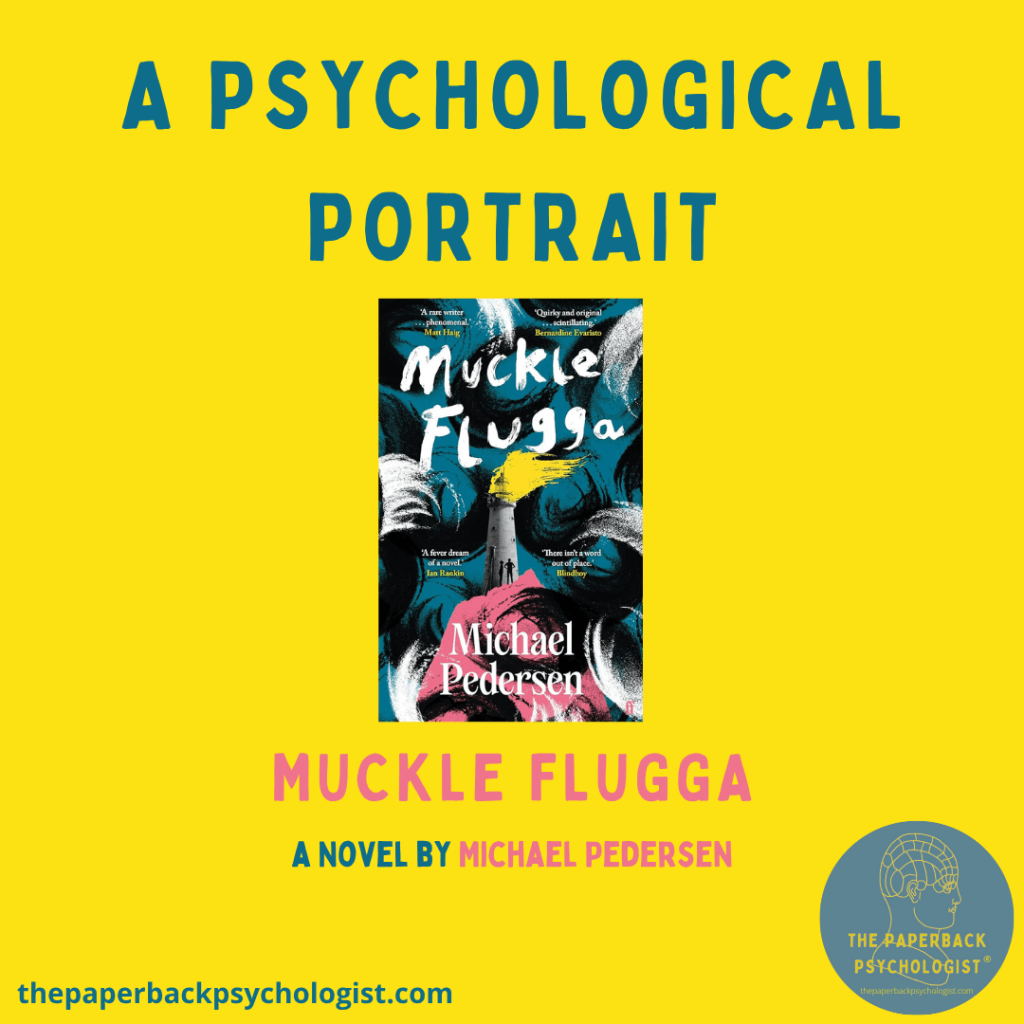
Michael Pedersen’s highly anticipated debut novel, Muckle Flugga, launched into the literary world in May 2025. Published by Faber, the book is remarkable and Pedersen’s lyrical prose leap from the pages. In the two weeks since its release, the book has been embraced and praised by both readers and critics. Like Firth, we as readers, are immersed in the land and people of the island, emerging from our visit to Muckle Flugga forever changed.
As a Clinical Psychologist, with an interest in the psychological make up of fictional characters, there is so much to think about in Muckle Flugga. The writing is nuanced, with each character having great depth and consists of both light and shade. Despite The Father and Firth acting in ways we may dislike at times, both are capable of love and compassion. For example, we are able to view The Father, not just as abusive or dismissive but someone that has suffered an incredible loss and endured significant trauma. Understanding the experiences that have shaped the characters, allows the reader to hold all the parts of the person in mind and feel a great compassion towards them. All three of the principal characters are given rich and complex lives. I felt compelled therefore, to write about both Ouse, Firth and The Father. I have written three individual psychological portraits but there are overlapping themes across the three. Each character is shaped by shared experiences and the interactions between them. I will consider the impact of the tragic death of The Mother on both The Father and Ouse, and how the arrival of Firth to Muckle Flugga transforms their lives. Furthermore, both The Father and Firth appear to be in a battle over Ouse. This seems to be motivated from a loving and caring place, but also from a position of control.
The environment in the book, feels like a living character also. The sea is an ever-present threat, that takes life, gives purpose and controls. Muckle Flugga is a small island surrounded by water. It gives The Father and Ouse purpose as lighthouse keepers but also confines and isolates them to the island. When we first meet Firth, he is contemplating suicide, by plunging from a bridge into the water below. We later find out that The Mother died from drowning. Furthermore, we discover the dark history of The Wreckers, a community that thrived on the death and destruction of shipwrecks. On the other hand, the sea also has the power to give life. Firth’s live was saved from his visit to the island, which in turn allows Ouse to leave and follow his true purpose. The sea is knitted into the very fabric of Muckle Flugga and its people. As a reader we feel it’s presence and power.
Applying Psychological Formulation to Fiction
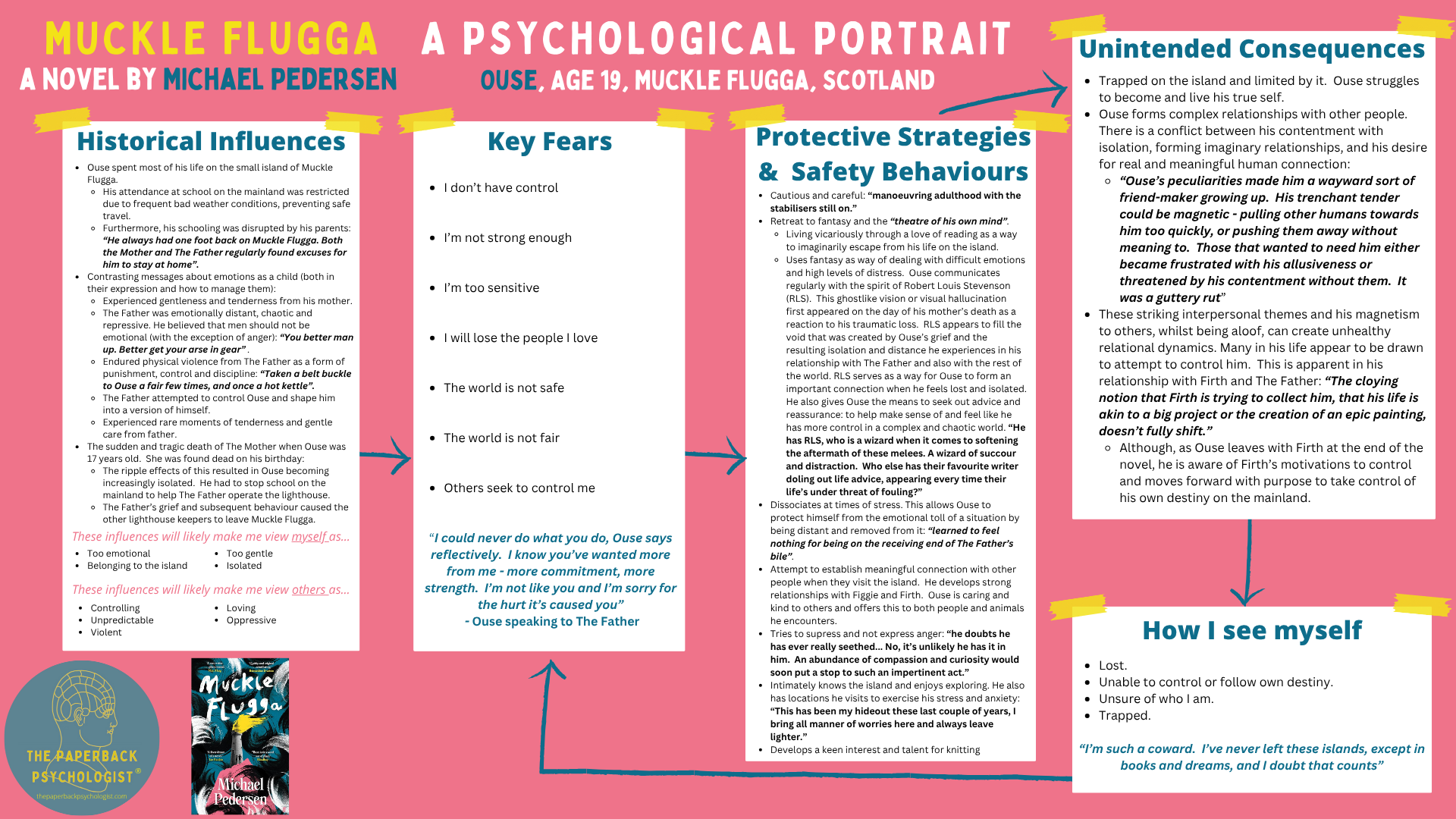
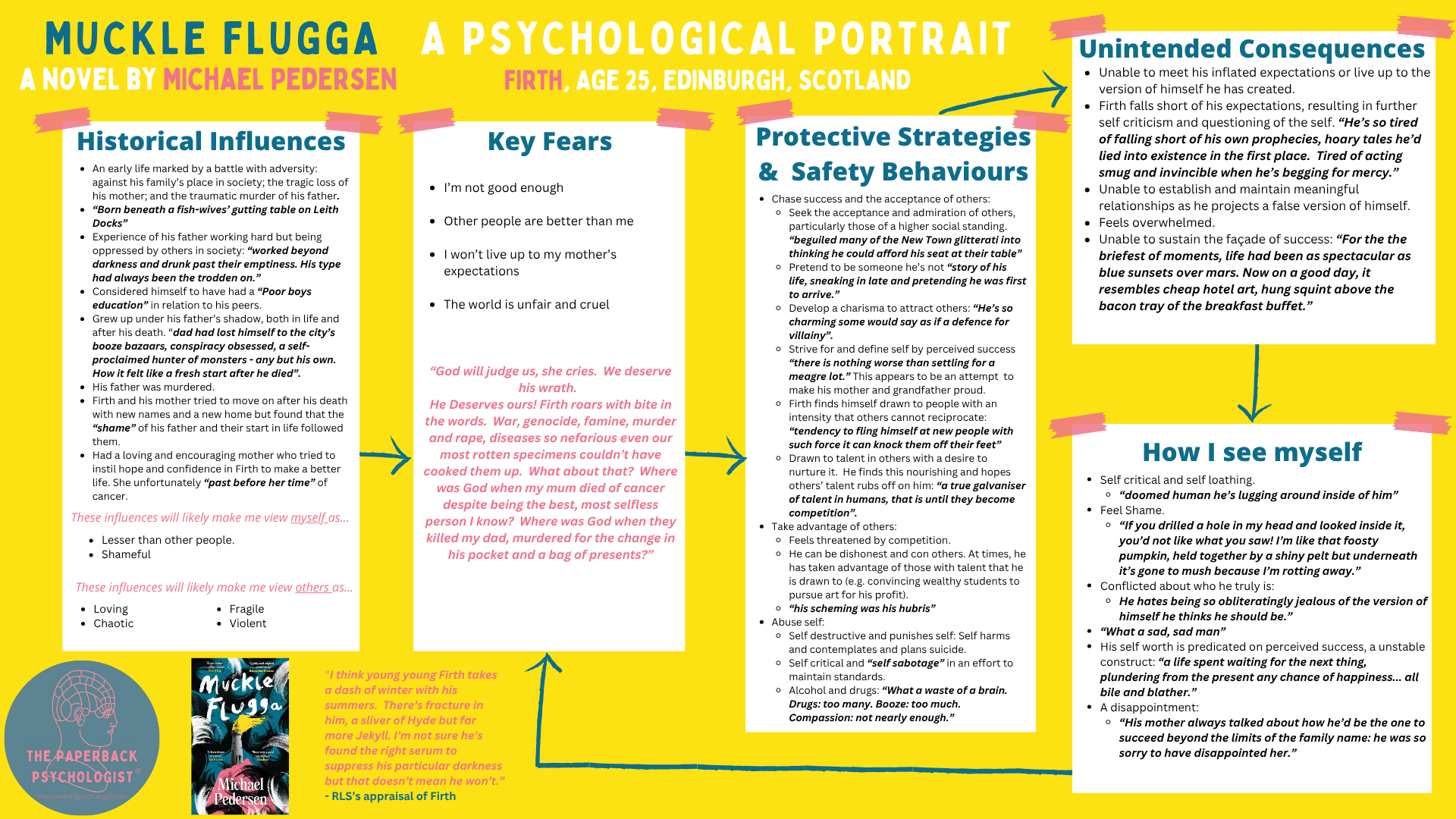
I use an approach called formulation to write psychological portraits of fictional characters. This is something that I regularly use in my clinical work in psychological therapy. I explore the events that have shaped the characters and their beliefs about themselves and the world. The portraits also explore the strategies used to protect themselves from their key fears. These have consequences which likely inform their view of the self and feed back into their key fears, forming a loop. This device allows for a greater understanding of the character as a whole and I hypothesise what may underpin their actions in the novel. The beauty of fiction is that we can all interpret things differently, and this interaction with fictional characters may be informed by our own experiences and beliefs. These psychological portraits should, therefore, not be considered definitive summaries of the character but are my take on them using a psychological framework.
Ouse: A Psychological Portrait
Firth: A Psychological Portrait
Click to enlarge
The Father: A Psychological Portrait
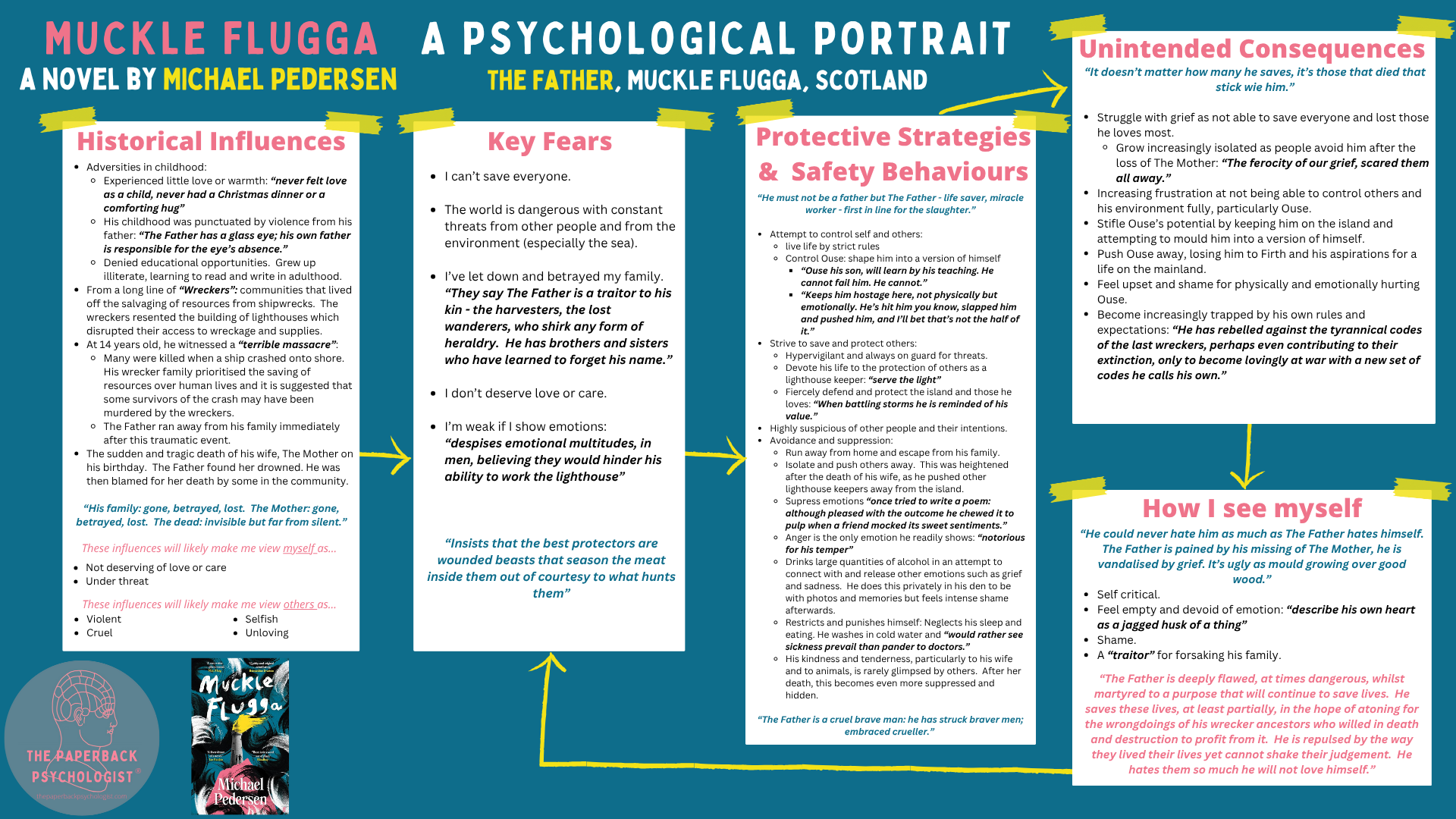
Compassion Focused Therapy formulation adapted from material developed by Paul Gilbert for http://www.compassionatemind.co.uk
Thank you to Faber & Faber and Michael Pedersen for the advanced copy of Muckle Flugga.
Read more psychological portraits of fiction at thepaperbackpsychologist.com
Follow @thepaperbackpsychologist on Instagram
To support my work and to allow me to continue applying a psychological perspective to literature, please consider making a donation here.

 The Paperback Psychologist
Leave a reply to Edinburgh International Book Festival 2025 – The Paperback Psychologist Cancel reply