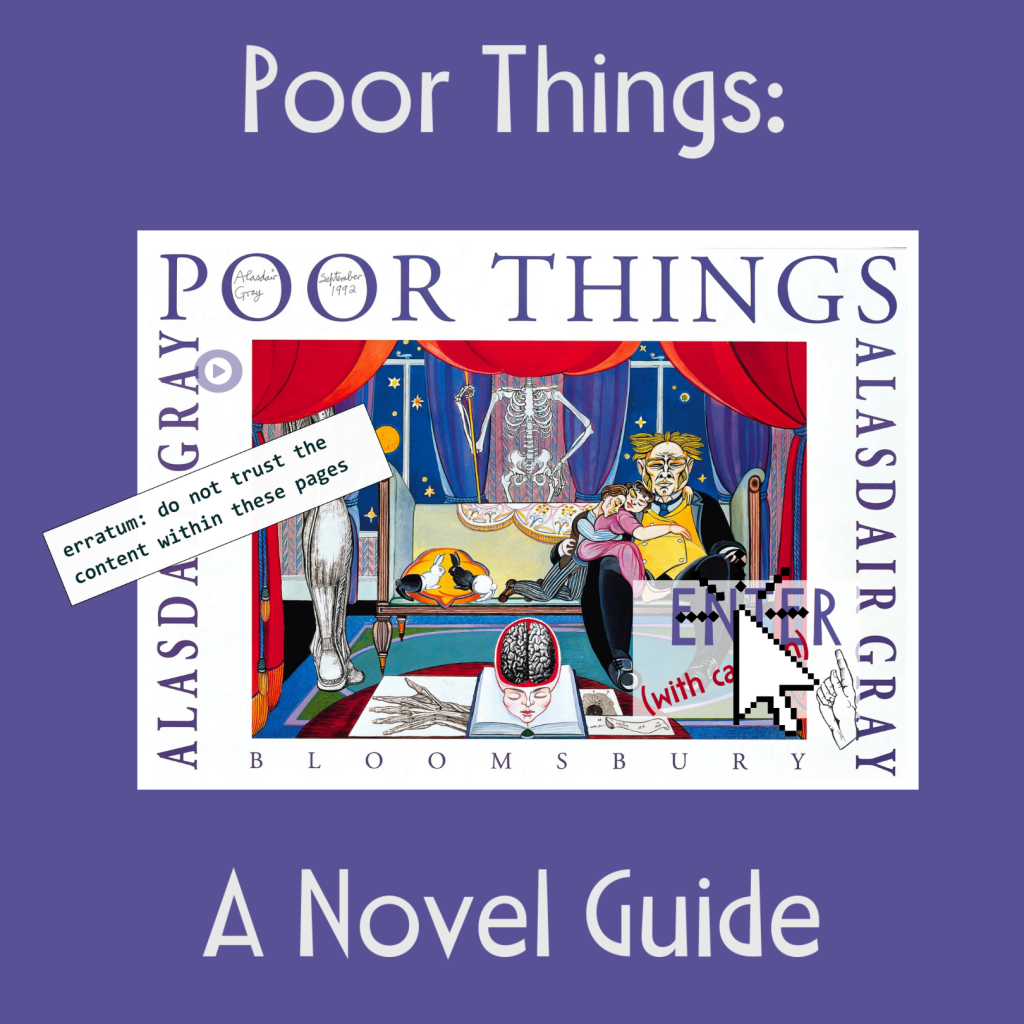
At the start of 2023, I had the opportunity to contribute to Poor Things: A Novel Guide, an exciting project from The Alasdair Gray Archive. The project is a celebration of Alasdair Gray’s work which gives audiences the opportunity to explore the book through essays, videos and creative responses.
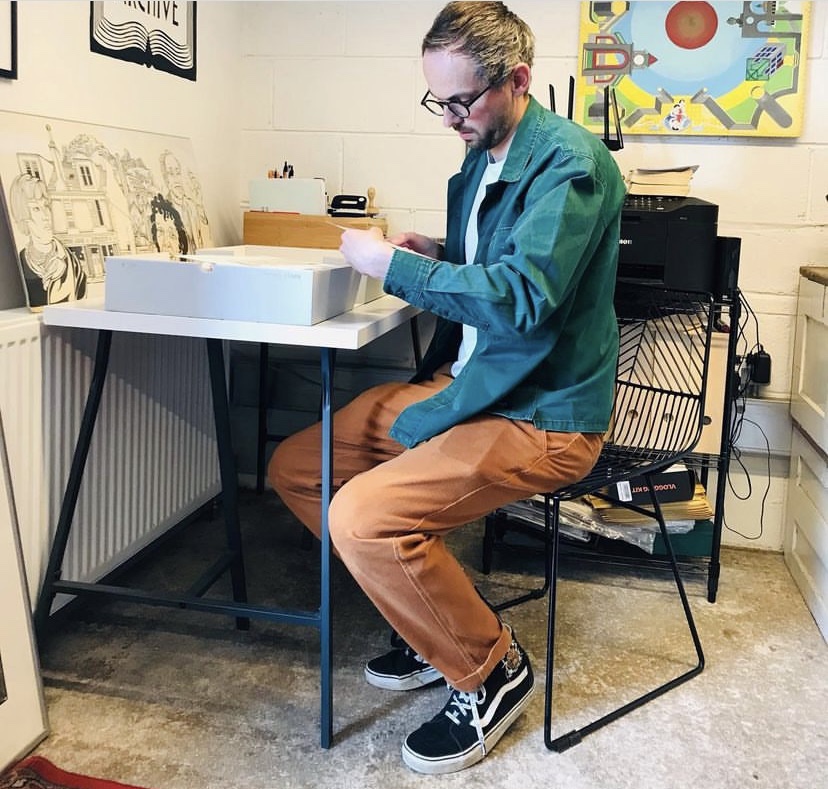
The digital project is timely as the film adaptation from Yorgos Lanthimos is currently taking film festivals and award season by storm. With all the excitement surrounding the film, Poor Things: A Novel Guide firmly grounds audiences in Gray’s award winning novel and Glasgow itself.
The project was designed and edited by Rachel Loughran and I was tasked with writing a psychological exploration of the “monstrous” and fascinating Godwin Baxter. This is part of a wider exploration of the character by other writers. I would encourage all to read my psychological portrait through the website below, to experience this as part of the wider context of the full digital resource:
https://www.poorthingsnovel.com/
My full psychological portrait can also be read below:
Godwin Baxter, A Psychological Portrait
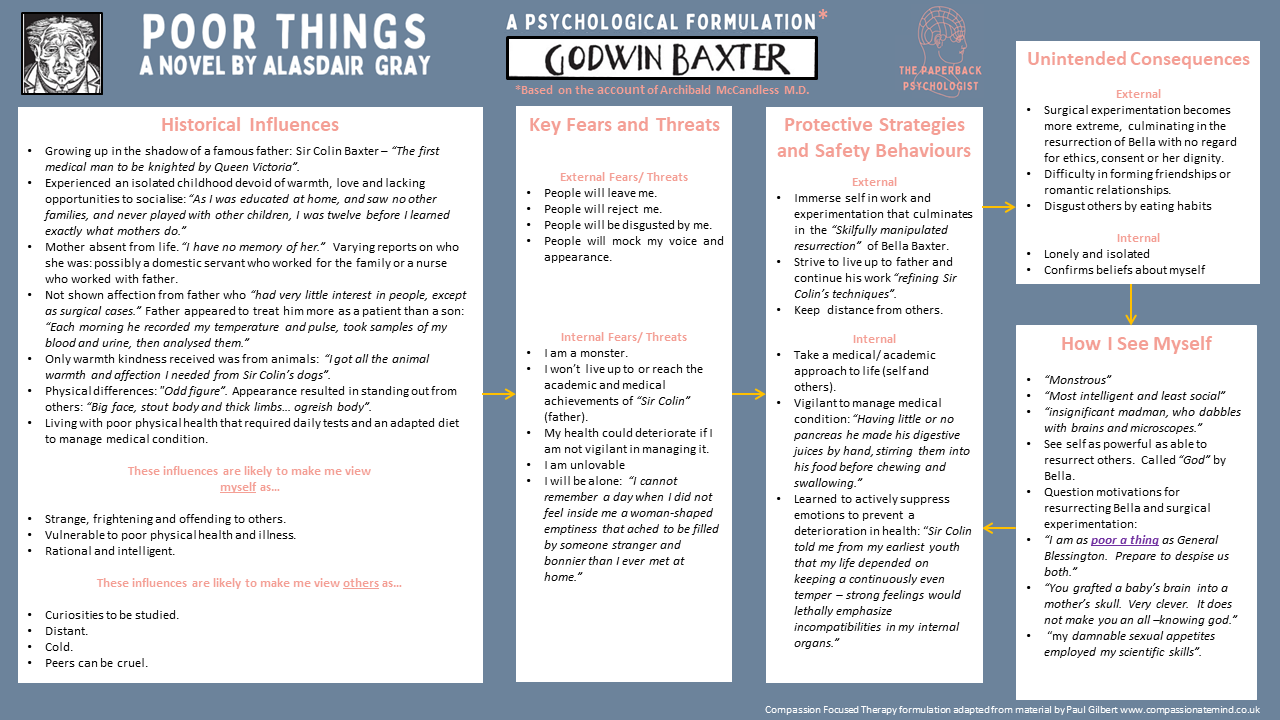
Poor Things’ monstrous Godwin Baxter is a fascinating and complex character, who plays a pivotal role in shaping the stories of Bella Baxter and Archie McCandless. In chapter two of Poor Things we are given an insight into Godwin’s early life and this gives us the opportunity to speculate on how these experiences may have shaped him into the character we meet. To explore Godwin’s character, I have used an approach called psychological formulation.
Formulation is a tool used by Clinical Psychologists in therapy, to collaboratively develop an explanation or hypothesis of an individual’s experiences and difficulties. This approach draws from psychological theory. Formulation is used to help people make sense of their experiences, and understand how they might find themselves stuck in current patterns or difficulties. This can be very helpful for setting goals for therapy.
The accompanying diagram, presents a formulation of Godwin Baxter and uses a format from a psychological therapy called Compassion Focused Therapy (CFT). Using this approach, we are able to consider Godwin’s character and the journey he takes us through the pages of Poor Things. I have used this method to explore Godwin’s early experiences and the environment that he has grown up in. The formulation in the diagram, considers the impact that this may have had on how he sees himself and others. In this we consider the impact of growing up in the shadow of his father, and in a home where the only warmth and affection he received was from family pets. We can speculate how this could shape his view of himself and the world and also establish the fears or threats that he may hold. For an individual to protect themselves from these deep fears, they are likely to develop and use defensive strategies or safety behaviours to protect themselves. For Godwin, a key safety behaviour is his life’s devotion to his experimental medical work, perhaps motivated by a desire to live up to his father “Sir Colin’s” legacy or to fill that “woman-shaped emptiness”. As we would expect, these safety behaviours come with consequences, however unintended they may be. Moreover, this is likely to feed into the ways in which Godwin views himself, confirming his beliefs and playing into his key fears, with his escalating medical experimentation creating a conflict in Godwin of feeling both a “god” but also “monstrous” and “damnable”. As can be seen in the formulation below, this leads to a vicious cycle of safety behaviours that he struggles to break out of.
Readers of Poor Things will be well aware of the conflicting account of events that Gray introduces towards the end of the novel with the letter from Victoria (Bella) McCandless. Victoria’s letter is far kinder to Godwin than McCandless account, which forms the main text of the novel. As a reader, we are uncertain as to what the true account of events is:
“You, dear reader have now two accounts to choose between”.
In the introduction and final note of the book, Gray creates uncertainty and conflict regarding the veracity of the reports from Victoria and McCandless and it is possible that both are unreliable narrators. The psychological formulation of Godwin Baxter that is presented here is informed entirely on the account of Archie McCandless but it is interesting to also consider a far different Godwin Baxter, based on the limited information Victoria gives us in her letter. In her version of Godwin, she questions McCandless’ representation of Godwin as strange and monstrous:
“Why did my second husband describe Godwin as a monster whose appearance made babies scream, nursemaids flee and horses shy? God was a big sad-looking man, but so careful and alert and unforcing in all his movements that animals, small people, hurt and lonely people, all women (I repeat and emphasize it) ALL WOMEN AT FIRST SIGHT felt safe and at peace with him.”
Furthermore, Victoria contests some of the facts of his earlier life regarding his mother, who she claims was part of his life and that “Godwin loved and acknowledged his mother”.
The use of psychological formulation in therapy can be a hugely illuminating and powerful tool to help make sense of our experiences and our own story. This can be an interesting device to apply to literature, to explore character in a deeper way. It is important to highlight however, that this approach, like any literary interpretation, is speculative and subjective and based on my own interpretation of the novel. Nevertheless, I hope this journey into the psychology of Alasdair Gray’s work is helpful to reflect on the complexities of such a gruesomely interesting character.
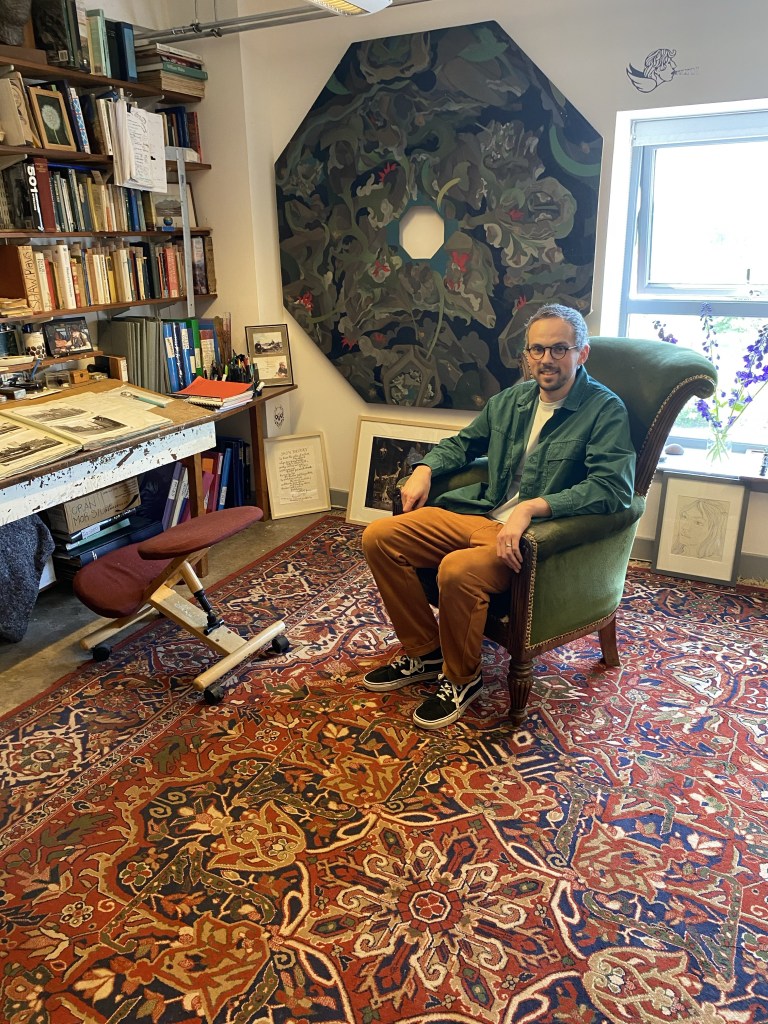
I hope this is the start of many contributions for The Alasdair Gray Archive. I visited in June this year and it’s an incredible experience having the opportunity to breath in Alasdair Gray’s amazing writing and artwork in a setting that replicates his living room and home studio. The archive is open to all and details for arranging a visit can be found on their website.
https://www.poorthingsnovel.com/
 The Paperback Psychologist
Leave a comment