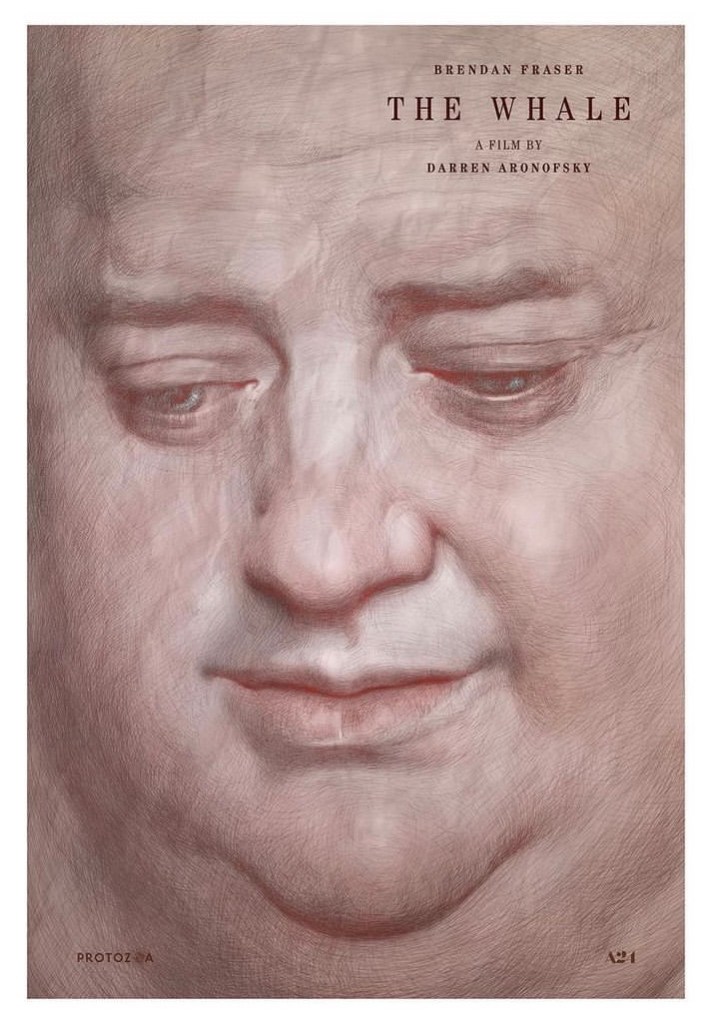
As a fan of the films of Darren Aronofsky, I greatly looked forward to seeing The Whale. Like most, I watched with delight as Brendan Fraser was thrust back into the limelight and the hearts of audiences around the world, for his portrayal of Charlie, the protagonist at the centre of the story. The Whale is a masterpiece of a film that deservedly won many awards, including an Oscar for Best Actor. It is adapted from the 2012 play by Samuel D. Hunter, who also wrote the screen play for the film.
The character’s are rich, complex and we meet them as they all attempt to save each other to varying degrees of success. The story takes place all within a single set: Charlie’s apartment. As a viewer, we too feel enclosed within this space across the two hours, giving us a sense of just how limited and restricted Charlie’s world has become. The primary cast consists of just five actors, with stellar performances from them all and each having their own scene stealing moments.
Charlie’s warmth, kindness, and belief in human beings is profound. He loves to teach and strives to help others find and embody their true self, finding their own unique voice and path in the world. Unfortunately, a series of tragic and traumatic events have resulted in Charlie becoming cut off from the world and those that he loves. His only direct contact is with his friend Liz (played by Hong Chau), a nurse who also cares for him. In the film we meet Charlie, at a point in time when his isolation is at a peak and his health begins to severely deteriorate, as he undergoes congestive heart failure. His seclusion is abruptly broken by the arrival of the mysterious missionary Thomas (Ty Simpkins); by a reunion after eight years and a series of visits from his estranged daughter Ellie (exceptionally portrayed by Saddie Sink); and near the end of the film, his ex wife Mary (Samantha Morton). There are other regular but limited contacts: the pizza delivery driver Dan, who leaves his delivery on the porch to collect after he has left; and his class of students whom he teaches online but with his camera turned off, for fear of exposing his true self and the extent of his obesity, which Charlie fears will be considered “disgusting”.
We follow Charlie over the course of a week as he tries to come to terms with the tragic events that shaped his and his loved ones’ lives. Charlie lives with the guilt of leaving his wife and daughter eight years ago to be with the love of his life: Alan. Tragically, Charlie then loses Alan from suicide. We learn over the course of the film, that Alan’s family were part of the New Life Church, the same church that Thomas has come from, and that Alan faced dismissal from his family and church for his sexuality and relationship with Charlie. It is implied that this was a significant factor in Alan’s suicide. Charlie then finds himself alone, without Alan and estranged from his daughter. When Ellie meets Charlie for the first time in eight years, she is shocked at her father’s appearance. He has gained a significant amount of weight, to the extent that his mobility and independence are severely impaired. In the film, we are shown Charlie being trapped in a vicious cycle of binge eating to manage distress and regulate his emotions, as he attempts to deal with his grief and the blame and self-loathing he feels. Despite Charlie facing death and the awful experiences of losing family and loved ones, his beauty and kindness still shines through. He still retains his love for people and wish to help people find themselves and flourish in life.
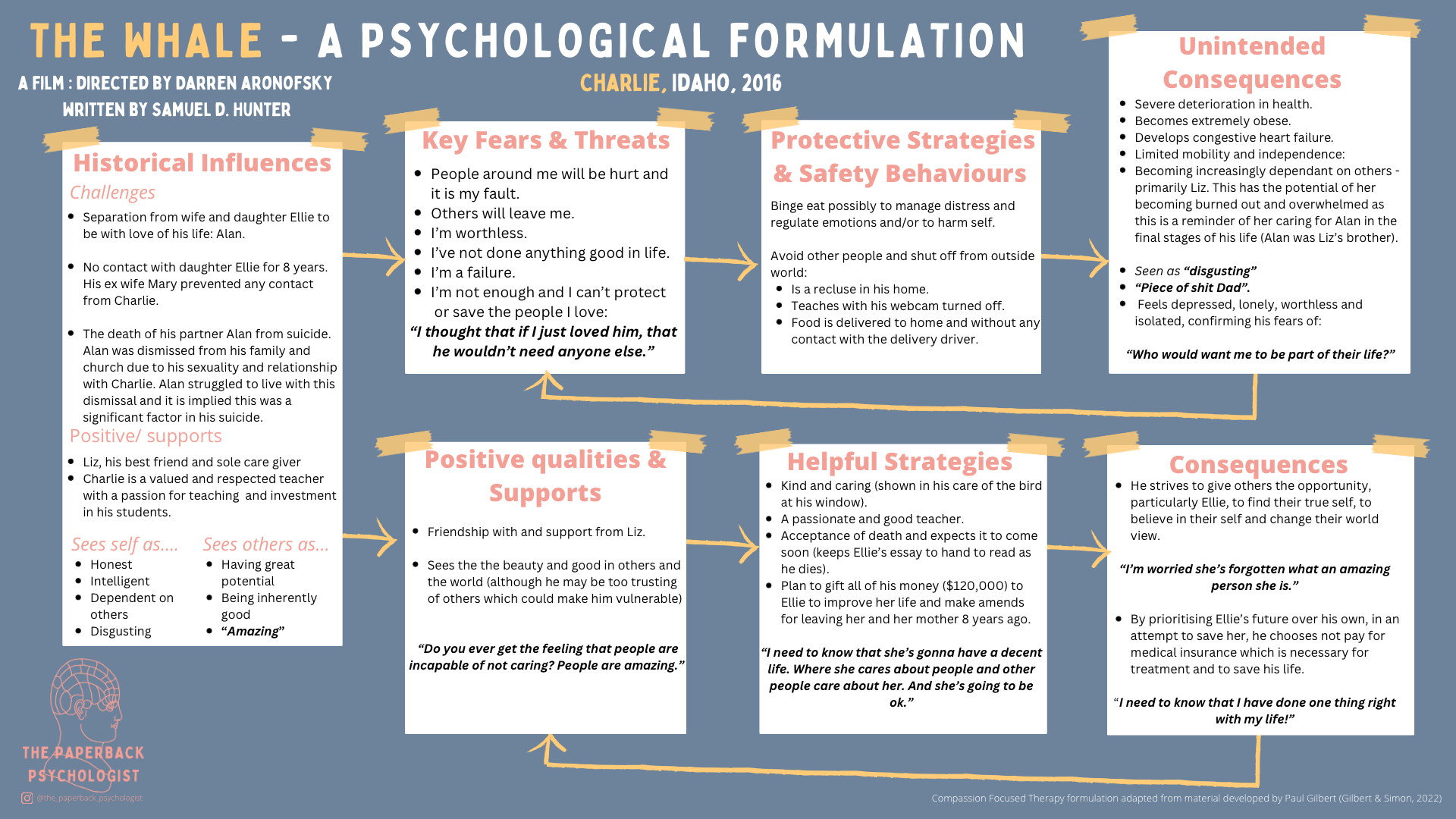
In this psychological character profile, I have used an approach from Compassion Focused Therapy, to seek to understand the impact that these losses have had on Charlie. The diagram for this is below. In this formulation, we explore the likely deep held fears that Charlie has and the protective strategies he employs to cope with this: which include binge eating and avoiding others. Through this we can then consider the likely consequences of these safety behaviours and how this traps Charlie in a cycle of self-loathing and destruction, to the detriment of both his physical and mental health, which then feed back into his key fears. Furthermore, we also consider that despite all of this darkness that Charlie has faced since the death of Alan, he still retains his optimism in people, his love for teaching and ultimately his wish to make amends with his daughter Ellie, to help her see “what an amazing person she is”. It is this love for his daughter and ambition to save her that likely costs him his life, as he forgoes paying for medical treatment and insurance to be able to pass on his entire wealth to Ellie. As the film ends we are left hoping that Charlie has done enough to help to set his daughter on the path back to her true self, thus saving her. In the final scene, as Charlie dies, he appears to realise this and with that, his desperate plea from earlier in the film has been fulfilled:
“I need to know that I have done one thing right with my life!”
 The Paperback Psychologist
Leave a comment