In Karen Campbell’s Paper Cup, we meet Kelly, who is homeless and living on the streets of Glasgow. During our time with Kelly, we join her on her journey home to Galloway. Any pre-conceptions that a reader may have of someone who is homeless are promptly challenged by Karen Campbell’s gripping and tender writing.
Throughout the novel, we are given a glimpse into the challenges that Kelly faces with the world and other people. She is dehumanised by most and is either ignored or abused. Karen Campbell strikes against this, revealing the human and exploring the circumstances that lead to her losing her home and ending up in her current predicament. Kelly has struggled with grief, trauma, addiction, and mental health difficulties. She has also been caught in the cruel and inflexible criminal justice and benefits system. As a reader, we are left considering that given the same circumstances, we too may have found ourselves in Kelly’s shoes (or cowboy boots!)

Through glimpses of Kelly’s past, and also by considering the stories of Kelly’s twin sister, Mandz and the character of the bride, we are able to compare Kelly with these characters and consider if given different circumstances, Kelly’s path may too have been different. This comparison is aided by Karen Campbell’s narrative shifts, where side character’s are given their own stories and focus for short passages of the book. The different characters that Kelly meets along the way, gives an insight into how she relates to others. Many help Kelly on her journey home but we also see the positive impact that Kelly has on those lucky enough to meet her. Kelly is an extremely likeable character and despite being mistreated by so many and the victim of cruel systems, she is still a deeply caring and compassionate individual. For example from her brief meeting with Craig, the lorry driver, he leaves this meeting determined to make amends with his partner and face the prospect of fatherhood, rather than avoiding it. At the heart of the novel, is Kelly’s relationship with the dog Collie. When she meets Collie, she liberates him from the abusive farmer, offering him companionship, care and kindness – things that Kelly has been denied many times throughout her life.
Karen Campbell, gradually reveals the tragic circumstances that leaves Kelly’s twin sister severely injured with lifelong repercussions for Mandz and alters the course of Kelly’s life. As a reader, we are at times led to believe that Kelly murdered her sister, with the details of the incident only coming to light nearer the end of the novel. Kelly doesn’t shy away from the darker parts of her past and takes responsibility for actions that have harmed others. Karen Campbell’s writing however, deals with this in responsible yet kind way, as the character of Kelly is so real and rounded, that we are able to compassionately consider Kelly’s harmful actions in the context of addiction, trauma and mental health.
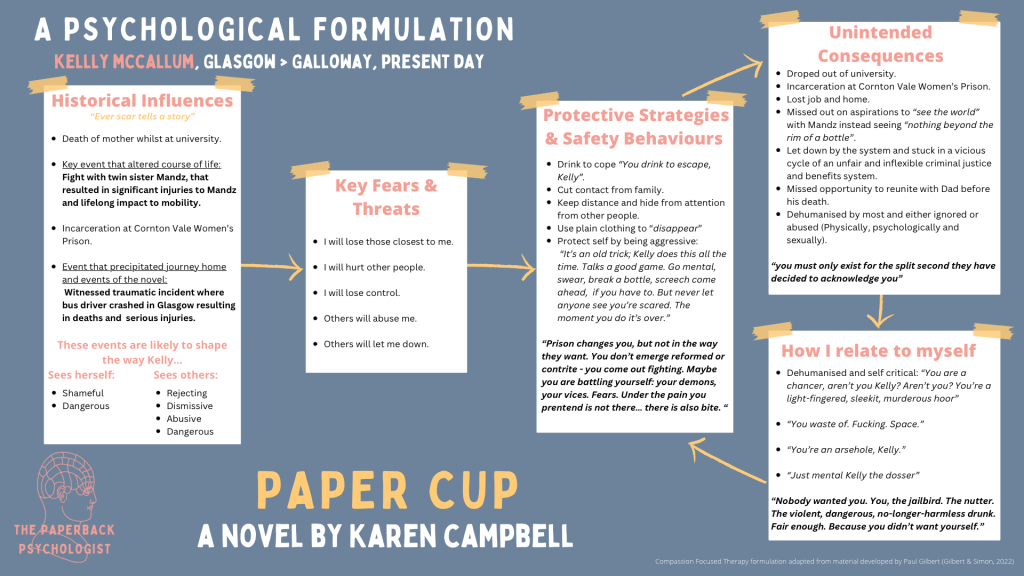
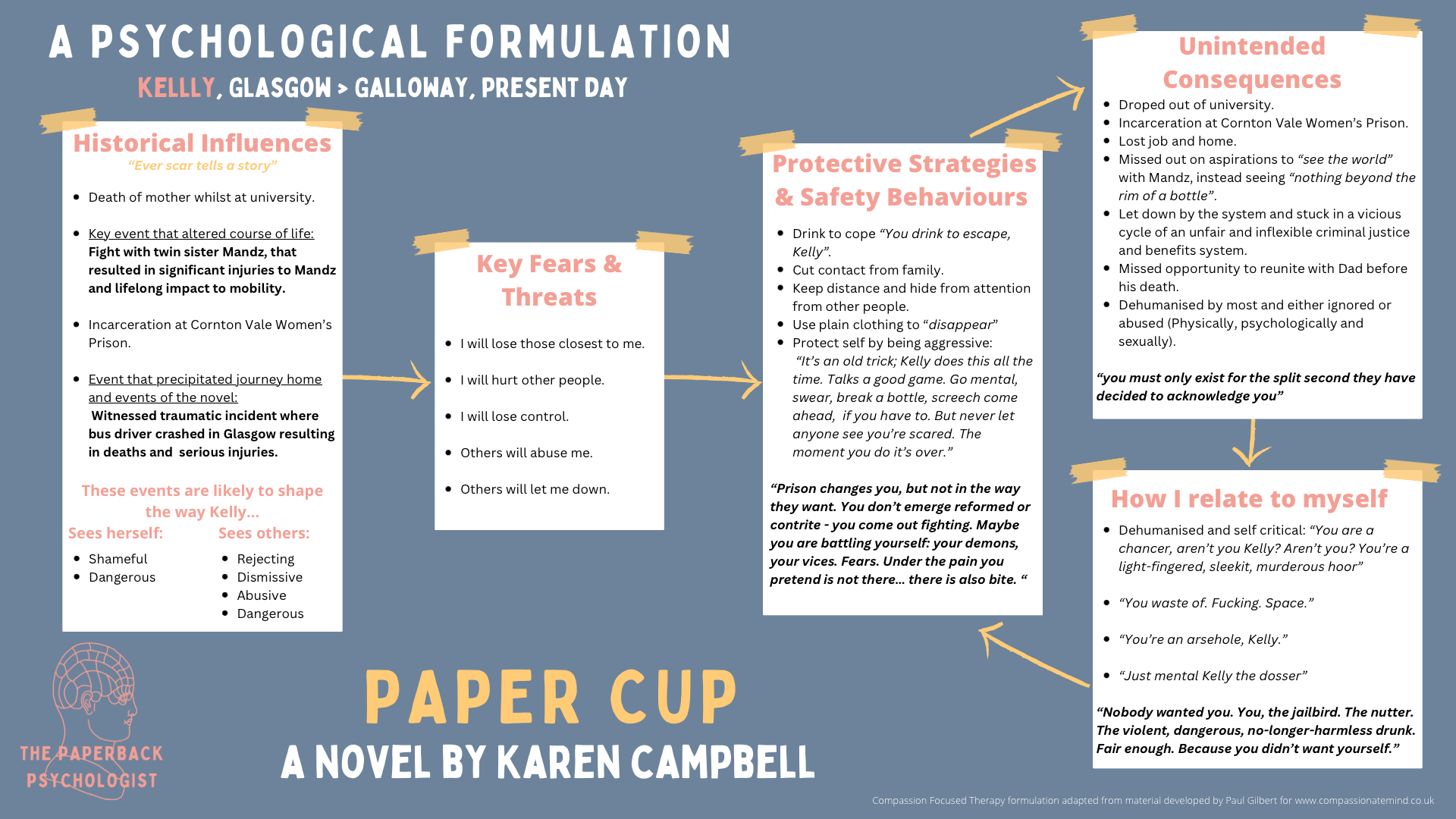
The psychological formulation that follows, attempts to consider all of these circumstances that shaped Kelly. It will explore the impact that this has had on her life and how Kelly relates to other people and herself.

 The Paperback Psychologist
Leave a comment