*Please note, this post contains spoilers for the book*
Shuggie Bain quickly became one of my favourite books. It was an important book for me, as I credit it (alongside a few others) as truly reigniting my passion for reading over the past year. Shuggie’s story is captivating and tragic in equal measure and Douglas Stuart’s writing is so beautifully descriptive; his characters, complex and relatable; and his environments so real, brutal and lived in.
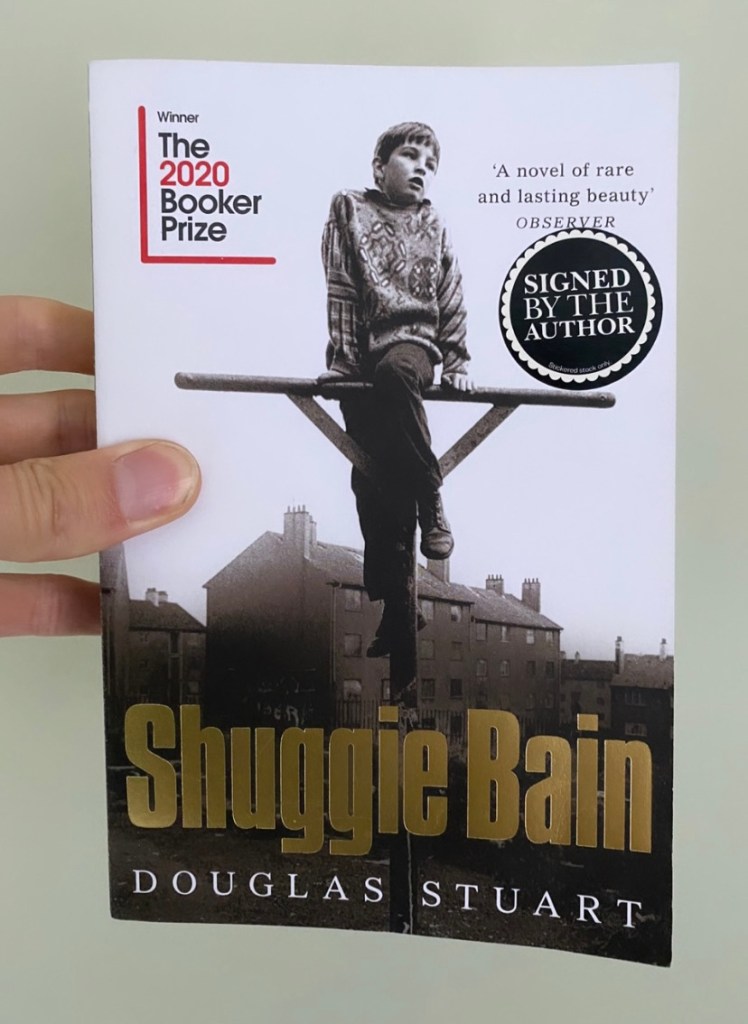
I was most moved and drawn to the character of Agnes Bain, Shuggie’s mother. I work as a Clinical Psychologist in an NHS Addictions service in Scotland, so there were many aspects of this book and Agnes’ character which resonated with me and piqued my interest from the perspective of my day job. I was struck by the raw honesty in the portrayal of Agnes’ struggles with alcohol and mental health. Stuart balanced the tragedy of Agnes’ life with a truly compassionate handling of her character. His writing pulls us fully into the highs and lows of the Bain family, evoking feelings of love and care towards Agnes at times, but also the heartbreak and frustration that she causes her loved ones. Stuart has spoken openly about the parallels with his own life and family experiences, which only heightens and validates the experiences of the characters and the feelings we have towards them as the reader.
.
A Psychological Formulation for Agnes
Being immediately drawn to Agnes, she was a character that I was keen to explore from the beginning of setting up this blog. As the reader, we care deeply for Agnes and I hope that I do her character justice and handle this in a sensitive manner. I would again like to state that this post and formulation is entirely speculative and based on my own interpretation of the book. I will be using a Cognitive Analytic Therapy (CAT) based formulation to explore Agnes Bain, which will take the form a diagram (or CAT map) and also a letter written to Agnes to summarise this work. I am hopeful that for others that loved this amazing book, that this is an insightful and different way to explore Agnes and characters in general.
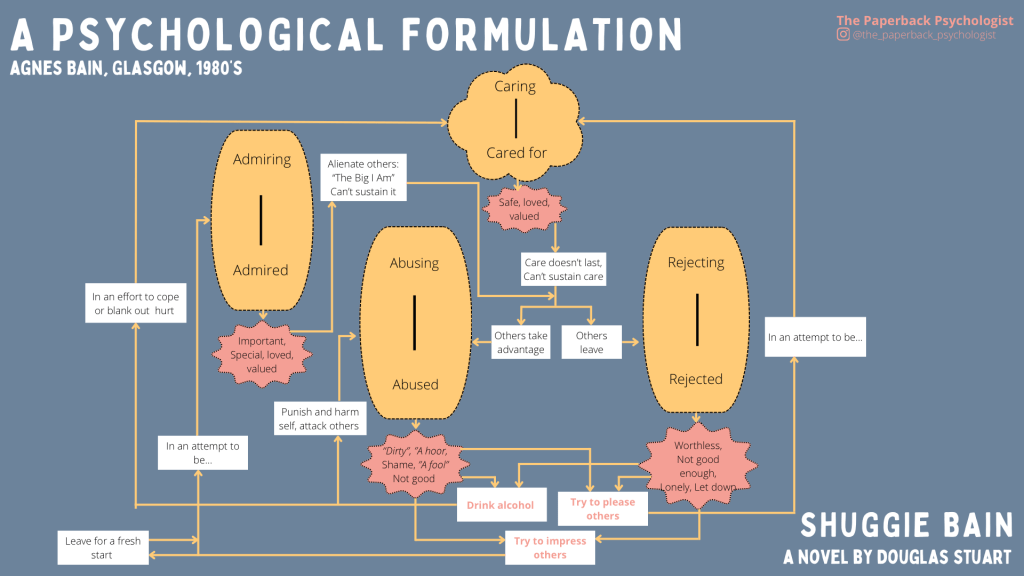
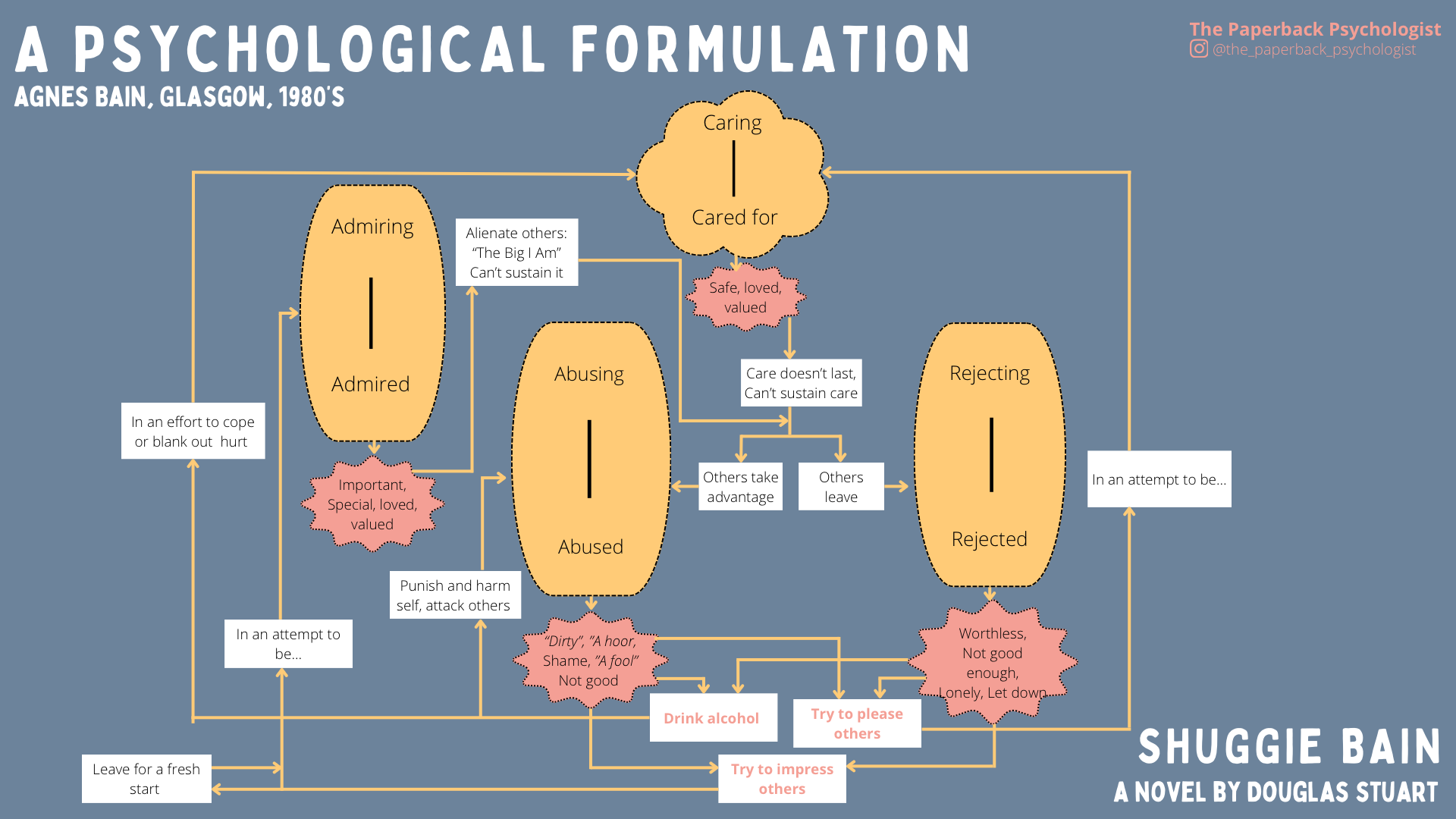
CAT is a form of psychological therapy. From a CAT perspective, children are hypothesised to learn from what they experience from the world and people around them. It is thought that children internalise the patterns that play out in these early relationships, particularly from care givers and those closest to them. These are called reciprocal roles which are proposed to be re-enacted in future relationships, both with the self and others. So basically, we learn ways of relating to other people and also ourselves from a very young age, and these relationship themes colour our interactions throughout our lives. In this form of psychological therapy we typically identify a small number of relationship themes (reciprocal roles) and consider how these connect to our emotions, behaviours and difficulties we might face. For the character of Agnes, I consider that there are four key themes that influence her relationships and her journey: being cared for, being admired, abuse and rejection. Furthermore, three important patterns of behaviours were identified: drinking to cope with distress; trying to please others; and trying to impress others. Below is my version of a CAT map which provides a diaphragmatic representation of the formulation for Agnes.
.
.
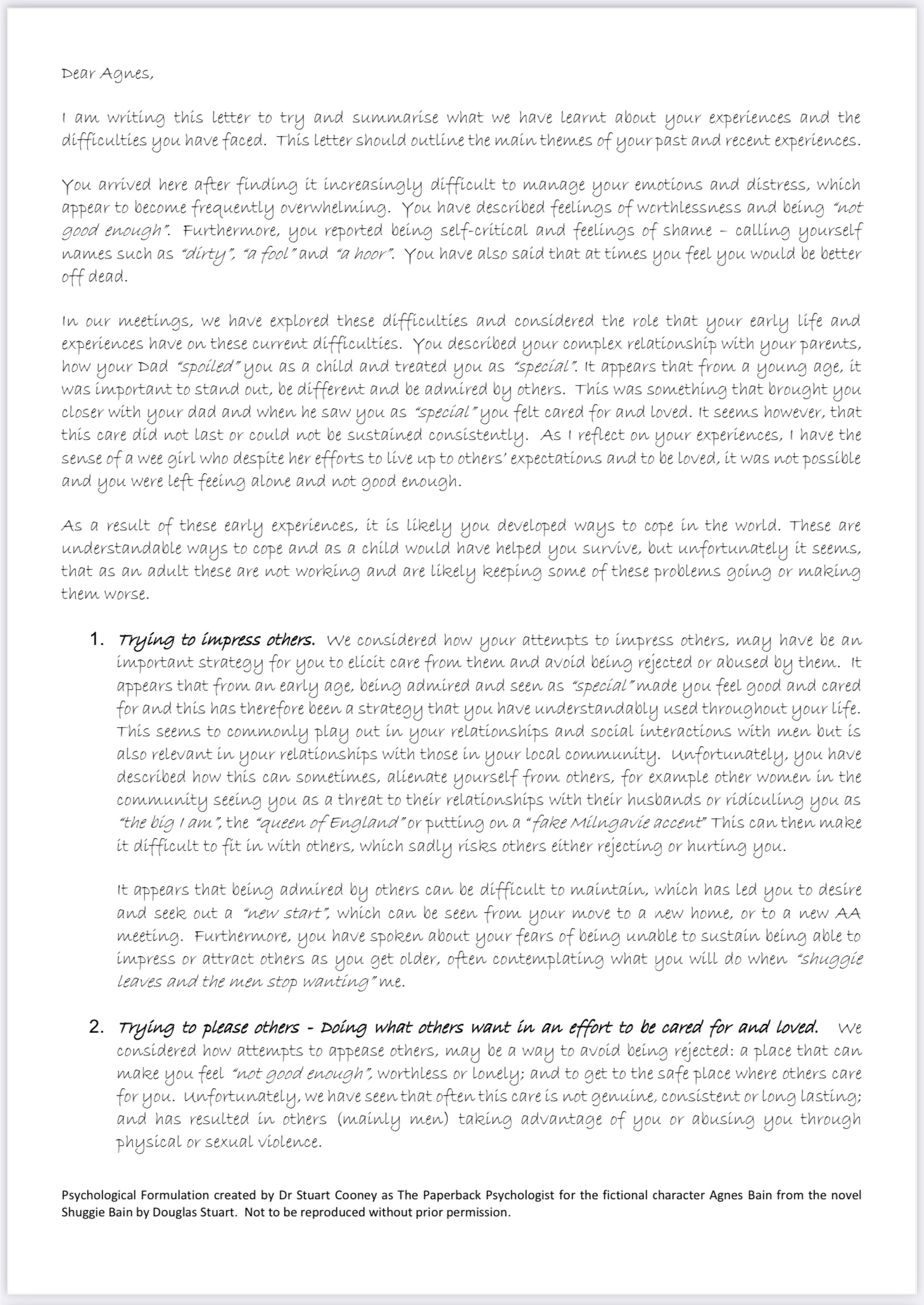
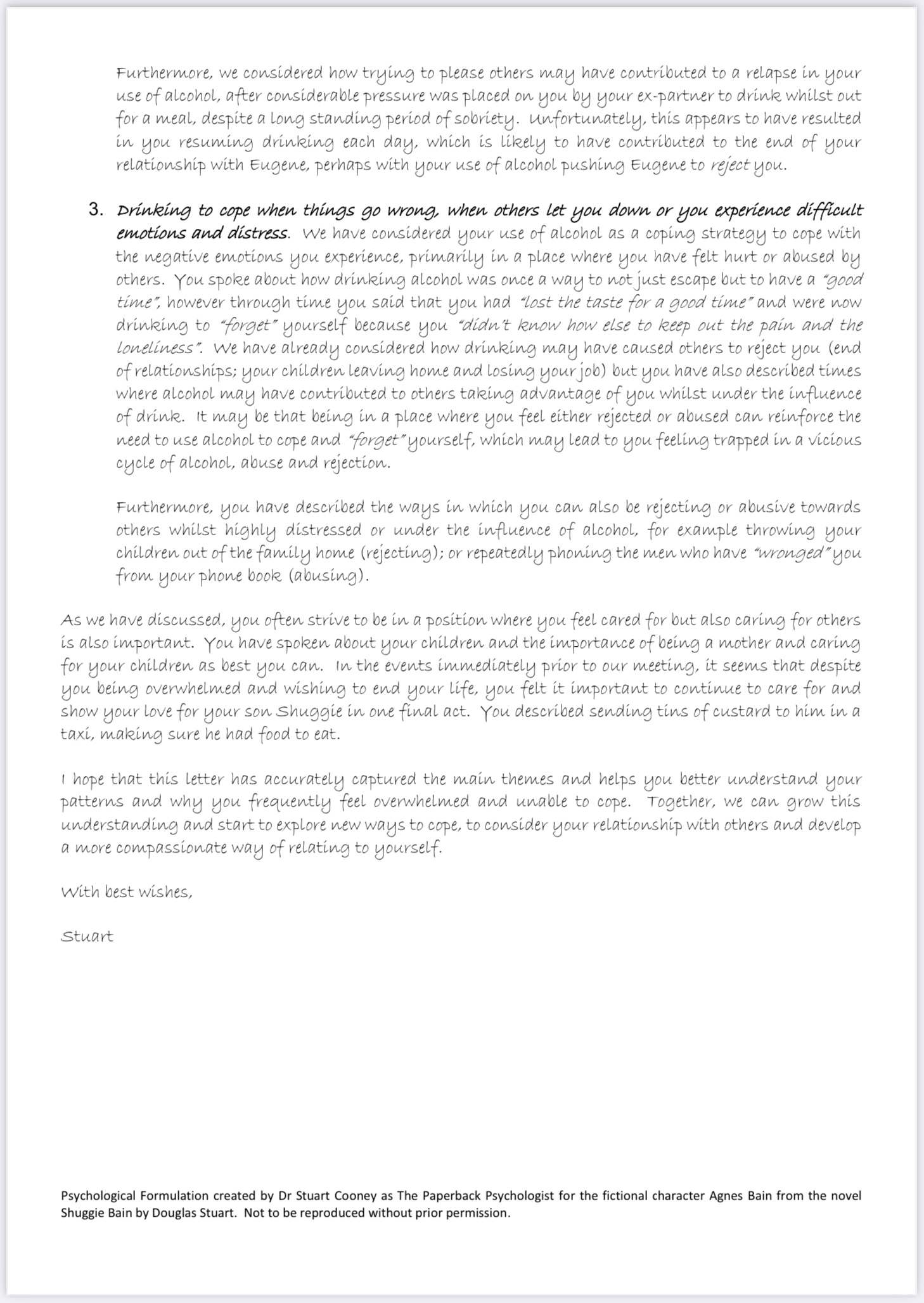
Dear Agnes… A letter written to reflect on her life and experiences
In Cognitive Analtyic Therapy (CAT), writing a letter to a client is a key part of the therapy process, often coming at the end of the assessment process. It is a powerful opportunity to reflect back on an individual’s story in a compassionate and coherent way. I have written this letter to Agnes as if she has attended for psychological therapy. For the purposes of this case formulation, it was helpful to choose a point in time in the novel, from where to write this letter. I am writing this letter as if meeting Agnes near the end of the events in the novel, after she is taken to hospital following an attempted suicide. This was after she pushed Shuggie out of his home and he went to his brother Leak’s flat. I hope that this letter is a helpful addition to the diaphragmatic formulation above, which provides a new way of thinking about the beautifully written character of Agnes Bain.
Support and Resources
It goes without saying that Shuggie Bain can be a difficult read and deals with challenging subjects. If anyone needs support for any of these issues I would recommend contacting We Are With You. They are a charity that provide free confidential support for individuals and family members who have difficulties with alcohol, drugs or mental health. They also provide a directory and links to a range of services that provide support across the UK.


 The Paperback Psychologist
Leave a comment